'%3e%3cpath fill='%23012169' d='M0 0v30h60V0z'/%3e%3cpath stroke='%23fff' stroke-width='6' d='m0 0 60 30m0-30L0 30'/%3e%3cpath stroke='%23C8102E' stroke-width='4' d='m0 0 60 30m0-30L0 30' clip-path='url(%23b)'/%3e%3cpath stroke='%23fff' stroke-width='10' d='M30 0v30M0 15h60'/%3e%3cpath stroke='%23C8102E' stroke-width='6' d='M30 0v30M0 15h60'/%3e%3c/g%3e%3c/svg%3e)
Published February 19, 2026
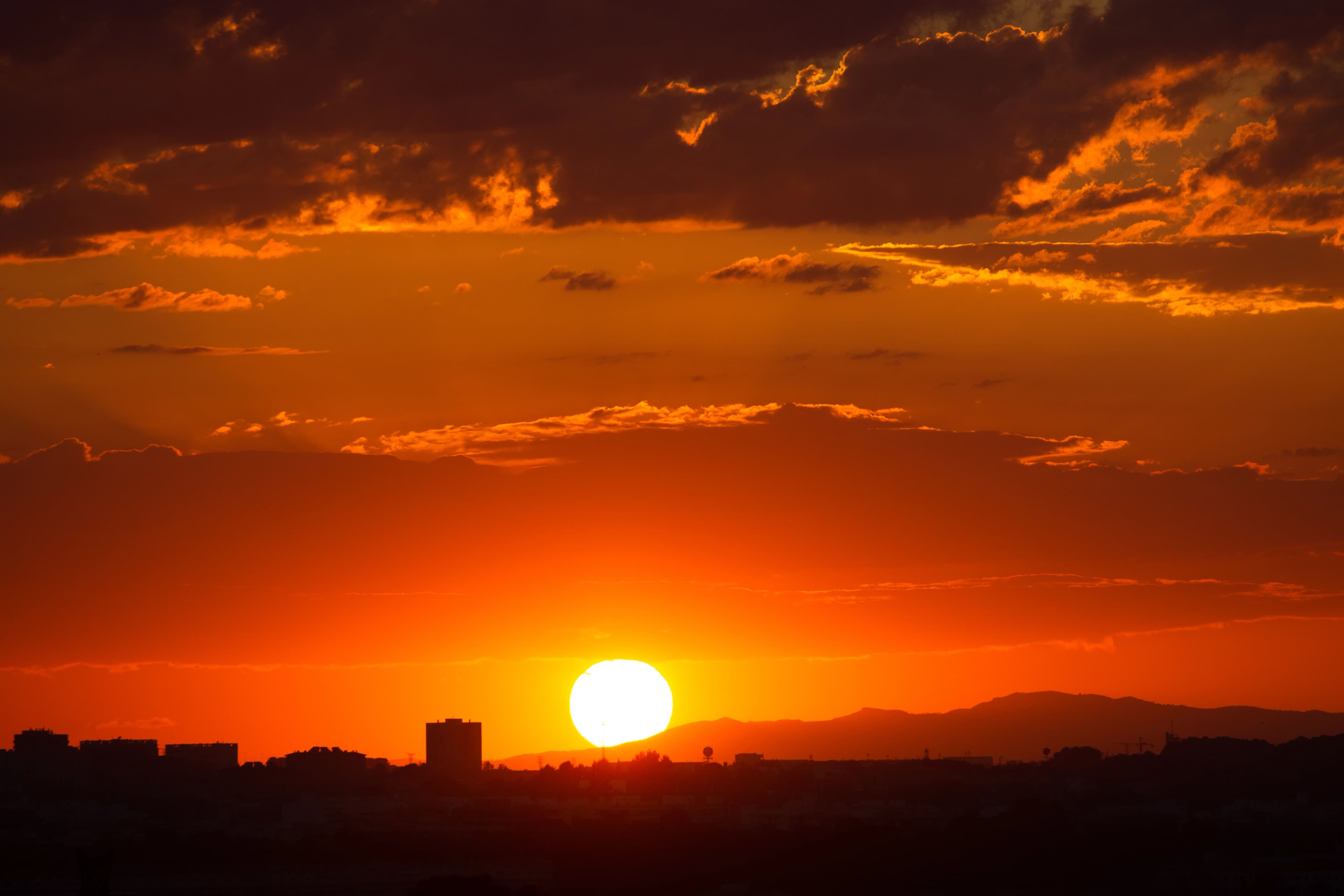
The total solar eclipse on August 12, 2026 will occur with the Sun very low on the western horizon in the Valencian Community. Photo: Jerónimo Roure Pérez / Wikimedia Commons (CC BY-SA 4.0).
"A total eclipse has nothing to do with a partial one". German Peris (Planetarium of Castellón) explains how and where to experience the phenomenon of August 12, 2026
On August 12, 2026, Spain will experience one of the most important astronomical events of the century: a total solar eclipse visible from the Valencian Community. To understand why seeing a partial eclipse is not enough and what makes totality truly special, we spoke with German Peris, Cultural Manager and Activities Coordinator of the Castellón Planetarium, who explains what we will be able to observe that afternoon and how to prepare to experience it fully.
For a few moments, the sky will darken at sunset, stars will appear, and the temperature will drop noticeably. A rare phenomenon that, according to the Planetarium itself, has not occurred in our country for over a century.
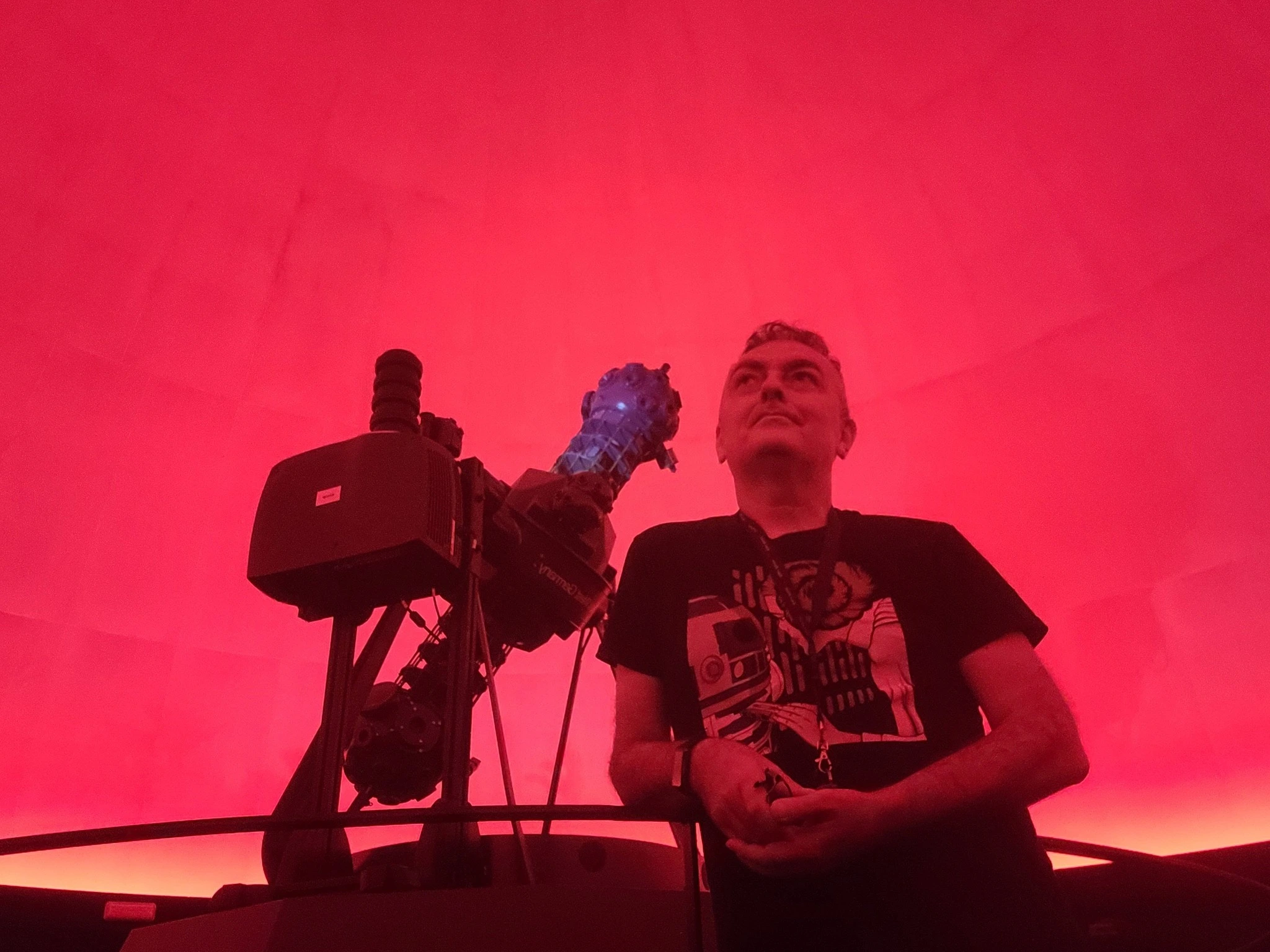
Germán Peris, Cultural Manager and Activities Coordinator of the Castellón Planetarium. Photo courtesy of the interviewee.
Before starting...
You can consult our practical guide on the best places to see the eclipse in Valencia and Castellón.
View eclipse guideWhat type of eclipse will we see in August 2026?
Spain will be crossed by the Moon's shadow during the total solar eclipse on August 12. That shadow, although it can vary slightly depending on the relative position between the Sun, Earth, and Moon, barely reaches between 200 and 250 kilometers in width, although it stretches thousands of kilometers due to Earth's rotation.
Within that band of totality, one of nature's most spectacular phenomena occurs. Outside of it, the eclipse will only be seen as partial and it will be necessary to use approved filters to observe how the Moon "bites" the Sun without completely covering it.
"One experience is not remotely comparable to the other"
How long will it last and what will we be able to see in areas like Castellón or Valencia?
The eclipse will begin at approximately 7:37 PM. For almost an hour, approved glasses will be needed to observe how the Moon begins to position itself between us and the Sun.
Totality will occur in Castellón around 8:31 PM, with the Sun very low on the western horizon. Valencia will have very similar values, with barely a minute's difference, although the duration will be different: Castellón will reach about 90 seconds of totality while Valencia will be around 60.
Cities, in any case, are not the best places to observe the phenomenon due to urban obstacles.
Castellón will have a longer duration of totality than Valencia
What's the difference between 99% and 100% totality?
A total eclipse is a celestial spectacle that, with luck, a person can see once in a lifetime, and it's worth observing it fully. Even with 99% obscuration, we are still missing that unique spectacle.
If we can, we should travel to enjoy it. Only within the band of totality does it become practically night. The solar corona can be observed directly, bright stars and planets appear, a marked drop in temperature is noticeable, the breeze changes, and so does the behavior of animals, with people exclaiming in unison. It has absolutely nothing to do with a partial eclipse.
"Only within totality does day turn into night"
Coast or inland?
The Castellón City Council will organize a large public observation over several kilometers of beach in front of the Planetarium, where we have already verified that the event will be visible. The beach is a good place if it is wide, has good access, and has infrastructure, which is the case here.
Inland, elevated areas with a completely clear western horizon should be sought. There may be greater clarity due to fewer layers of air, but also a higher risk of rapidly developing storms at that time of year. The worst part is the possible overcrowding and less prepared access for a large influx of vehicles, from such a massive and tourist event, with many people traveling on the same day, and I say this from experience, as this will be my third total solar eclipse.
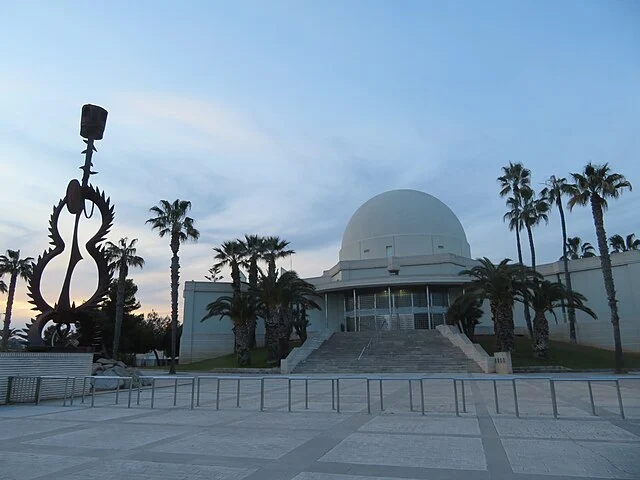
Planetarium of Castellón (Grau de Castelló). Photo: Juan Emilio Prades Bel / Wikimedia Commons.
The planned public observation will take place on the beach area in front of the Castellón Planetarium
What should someone who wants to travel consider?
It is important to ensure that the maximum of the eclipse is visible from the chosen location, review cloudiness statistics from previous years (data available from the IGN or in the work of the late eclipse expert Dr. Fred Espenak), have adequate access, accommodations, service stations, or medical assistance if necessary. If attending a public event, it is advisable to verify that there is good planning.
Is it worth traveling to see it?
If we are not in the band of totality, being able to go to it, we don't know what we're missing, regardless of whether we like astronomy or not.
A total eclipse is an absolutely unforgettable moment. It's worth experiencing it calmly, in open spaces and with our loved ones. We haven't seen anything like this in our country for over a hundred years.
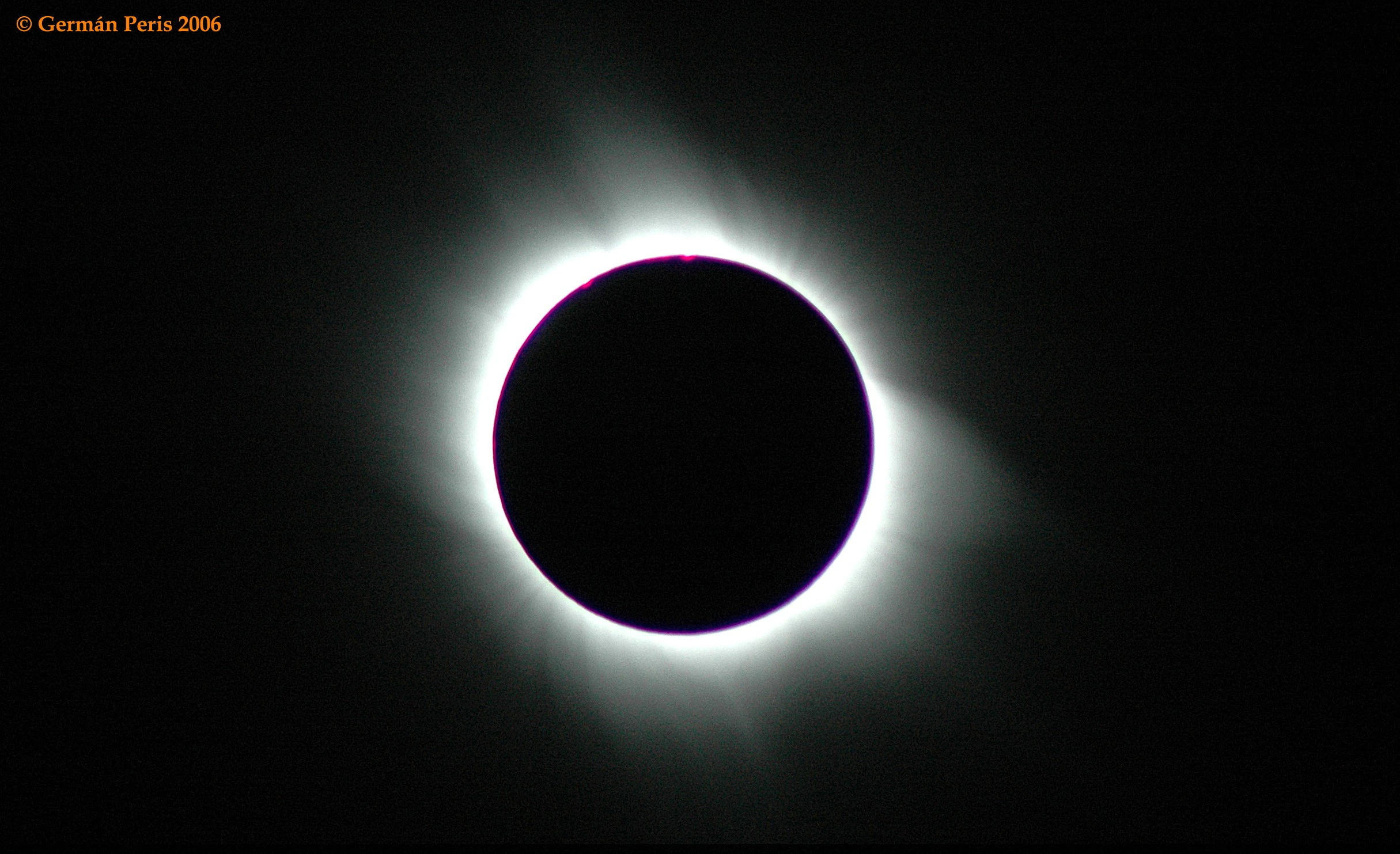
Image provided by German Peris, Cultural Manager and Activities Coordinator at the Castellón Planetarium. Libya 2006.

Patricia Alcántara
Fleet Director at Malco
Specialist in fleet management and optimization of corporate mobility solutions.