
Published May 21, 2026

6 viewpoints, 2 days, one province: the Valencia you only discover by driving. Photo: Rafael Minguet Delgado.
The 6 most spectacular viewpoints in Valencia you can only reach by car
There is a Valencia that does not appear in the city guides. It is not in the Mercado Central, nor in the City of Arts and Sciences, nor in any beach bar on the Malvarrosa. It is higher up, further inland, at the end of a country road that narrows just as the views begin to get serious.
The province of Valencia hides a geography that surprises anyone who only knows it for its coastline: mountain ranges over a thousand metres high, turquoise reservoirs, orange-grove valleys photographed from above, and a natural lake, the Albufera, that at sunset turns the horizon into something that looks painted. All of these landscapes have one thing in common: you arrive by car, or you do not arrive.
This is the route of the viewpoints worth the detour. And we already have the car ready.
1. Mirador de Garbí — The highest balcony over Valencia and the Mediterranean
If you had to explain to someone where Valencia city ends and nature begins, you would take them here. The Mirador de Garbí, in the Sierra Calderona, is the highest-rated viewpoint in the entire province with 4.8 out of 5 and more than 4,200 reviews — a figure that is unusual for a natural viewpoint and speaks volumes.
From its 598 metres of altitude you can see everything: the city of Valencia to the south, the Mediterranean as the backdrop, the fields and orchards of the Camp de Morvedre region rolling out towards the sea. On clear days, the panorama is dizzying. The road that climbs through the Calderona is worth the trip in itself: tight bends through pines and scrub, almost no traffic, with that smell of rosemary that only exists when you drive with the windows down.
Driving tip: The CV-25 towards Estivella is a secondary road in perfect condition. The last stretch to the car park is a firm forest track passable with any normal car. You do not need a 4x4.
Best moment for the photo: Spring sunset, when horizontal light makes both the sea and the city shine. Also spectacular at sunrise with low mist in the valley.
2. Mirador del Pujol — The most famous sunset over the Albufera
The Albufera of Valencia is one of those landscapes everyone knows by name but few truly experience. The largest lake in Spain, the birthplace of Valencian rice and the origin of paella, has a vantage point that, at sunset, becomes one of the most intense visual spectacles in the Valencian Community.
The Mirador del Pujol, with an average of 4.7 and more than 3,400 reviews, is no secret. But arriving by car makes the difference: you can be there just as the light starts to fade, wait for the sun to drop behind the sierra and leave whenever you want. The colour show a reviewer describes — "oranges that keep fading as the light from the sun slowly disappears" — cannot be planned around public transport.
Driving tip: The CV-500 borders the lake and crosses the Natural Park. Respect the 50 km/h speed limit in the protected area and take the chance to stop at one of the secondary viewpoints along the road before reaching the Pujol.
Best moment for the photo: Sunset, no debate. Arrive 30 minutes early to pick your spot.
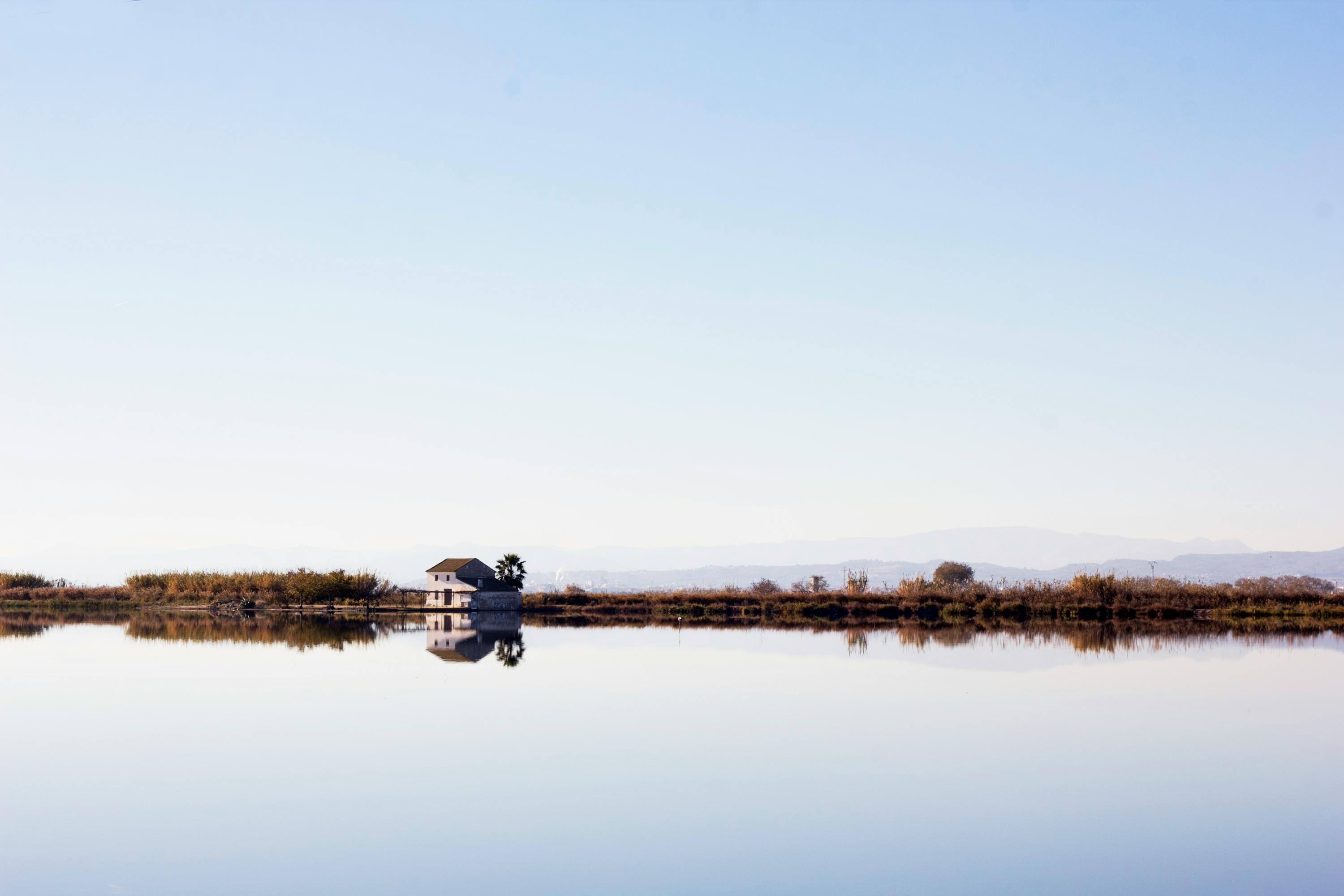
Sunset over the Albufera of Valencia from the Mirador del Pujol. Photo: Alberto Garcia.
3. Mirador de la Tierra Colorá — The canyon no one expects in Valencia
There are places in the province of Valencia that look like they belong to a different continent. The Mirador de la Tierra Colorá, over the Júcar reservoir in Cortes de Pallás, is one of them. Red earth, the blue-green reservoir in the background, cliffs falling vertically and a silence broken only by the wind. More than 300 reviews with a 4.7 average from visitors who often admit to being blown away by something they did not expect to find in Valencia.
This is the kind of viewpoint that works especially well on Instagram precisely because no one associates it with the province: the image contrasts with everything people imagine when they think of Valencia, and that generates engagement. The road from Buñol to Cortes de Pallás is also one of the best drives in the province: little traffic, ever-changing landscape and curves that open up the horizon kilometre by kilometre.
Driving tip: The CV-428 has some mountain stretches with steep gradients. Nothing demanding, but if you are not used to mountain roads, take it easy and enjoy the scenery. The car park next to the viewpoint is spacious.
Best moment for the photo: Midday in spring, when the light falls perpendicular and saturates the reds of the earth. Also at sunset, with the reservoir catching the last rays.
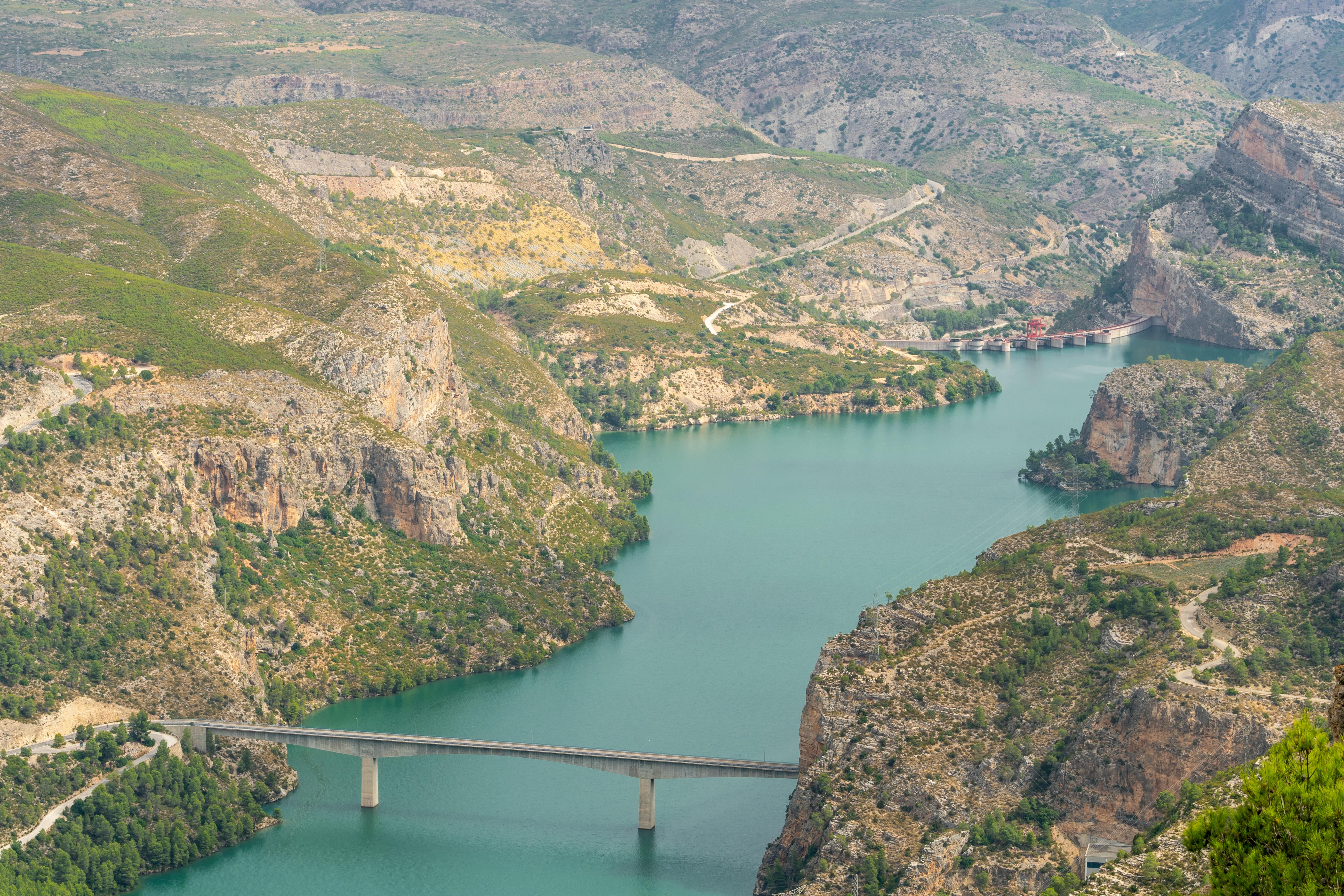
Red earth over the Júcar reservoir in Cortes de Pallás. Photo: Rafael Minguet Delgado.
4. Mirador de l'Abella (Olocau) — The views cyclists keep to themselves
In the Sierra Calderona, just a few kilometres from Garbí but with a completely different character, the Mirador de l'Abella has been the reference point for mountain cyclists in the region for years. What gets tagged as "hidden gem" on social media is actually true here: 4.8 average with more than 100 reviews but still low awareness among the general public.
The views from l'Abella cover, on clear days, Valencia city, the Albufera, the Montgó in Dénia and, to the west, the inland mountain ranges. It is the most complete panorama of the Calderona and it is accessible by car right up to the summit, making it one of those viewpoints where effort and reward are perfectly balanced.
Driving tip: The track from Olocau is in good condition but narrow. If you meet another vehicle, one gives way. The verges are enough to manoeuvre without issue. Do not trust Google Maps on the last kilometre: follow the park signage.
Best moment for the photo: First thing in the morning, before summer haze blurs the horizon. In spring, visibility is at its best.
5. Mirador de la Valldigna (Simat de la Valldigna) — Orange groves, sea and monastery from the heights
The Valldigna Valley is one of those corners of the province with every ingredient for the perfect photograph: orange groves laid out in terraces, the Monastery of Santa Maria de la Valldigna in the background, the Mediterranean closing off the horizon and the mountains framing the scene. From the viewpoint above the valley, all of that fits in a single frame.
With an average of 4.6 and almost 280 reviews, it is a regular stop for cyclists and hikers, but also perfectly accessible by car. The road up from Simat is narrow and full of tight bends — exactly the kind of stretch that turns a journey into an experience.
Driving tip: The climb from Simat has tight bends and some sections without a verge. Drive slowly, use the horn on blind curves and enjoy yourself: it is barely three kilometres that in spring, with the orange blossom, smell heavenly.
Best moment for the photo: Early spring, when the orange trees are in bloom or loaded with fruit. Midday light saturates the valley's colours exceptionally well.
6. Mirador del Embalse de Contreras — The canyon that marks the province's edge
To close the route, a viewpoint that literally marks the edge of the province: the Contreras reservoir, on the border between Valencia and Cuenca, is one of those places where geography does something dramatic. The Cabriel river is hemmed in between rock walls that fall 200 metres down to the water, and from the viewpoint in the recreational area the landscape has a scale that throws you off balance.
It is not a regular viewpoint: it is a driving experience as much as a contemplative one. The road from the A-3 down to the reservoir snakes through a progressive canyon that closes in until the water suddenly appears, 200 metres below. One of those moments when the driver and the passenger look at each other at the same time.
Driving tip: The N-330 to Contreras is a national road in perfect condition, with good surfacing and clear signage. The recreational area has plenty of parking and easy access.
Best moment for the photo: Any time of day — the orientation of the canyon guarantees direct light on the water for most of the day. In spring, the reservoir level is usually high, which maximises the visual impact.
The full route: how to link the 6 viewpoints of Valencia
These six points naturally fall into two days from Valencia city or from anywhere along the coast:

Pablo Rivera
Commercial Director at Malco Digital Group
Specialist in commercial strategies and business development in the mobility sector.