
Published August 20, 2026
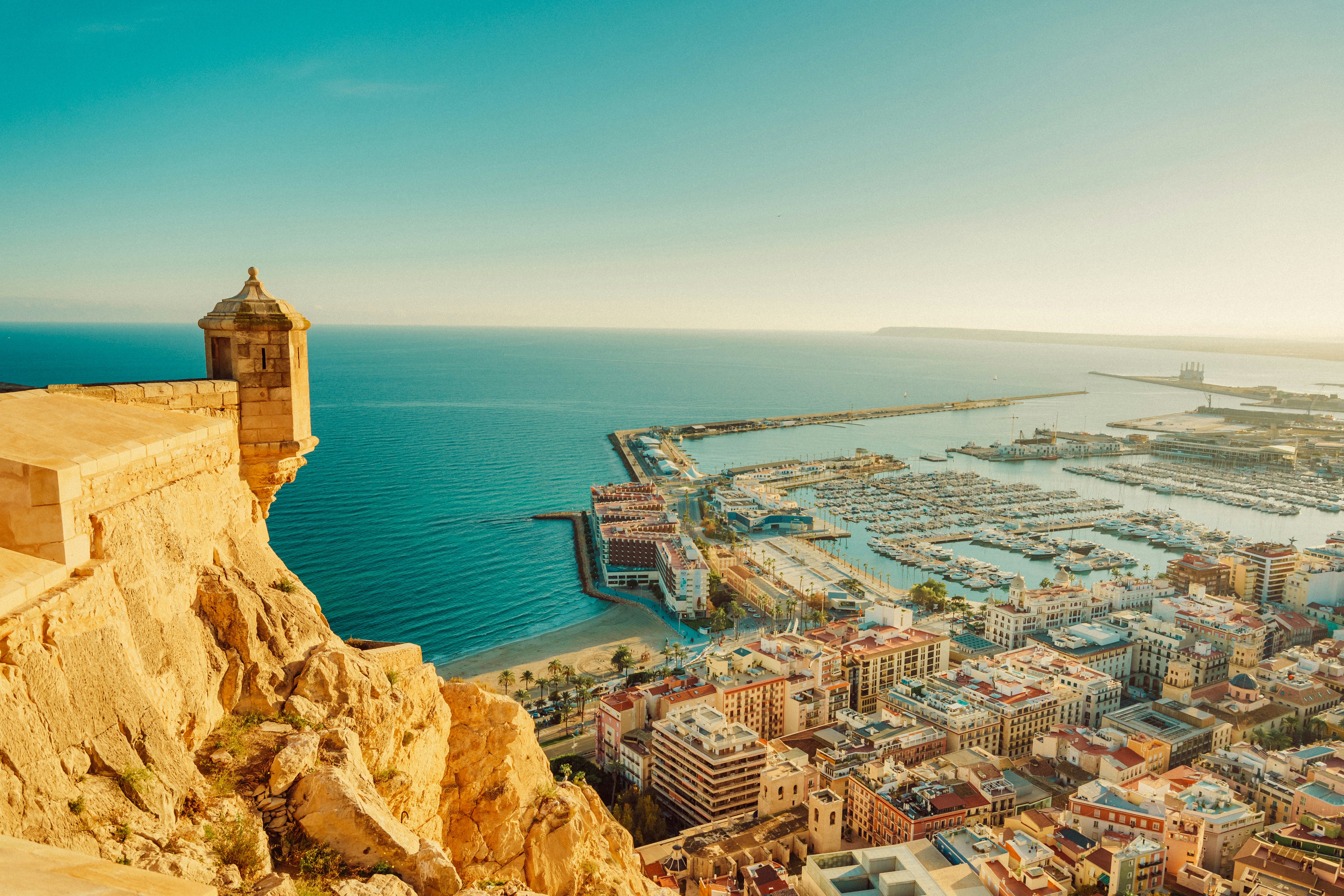
The 5 most photogenic villages in Alicante on a weekend driving route. Photo by Dean Milenkovic on Unsplash.
5 villages in Alicante so photogenic you'll want to stop the car at every bend
Some villages need no filter. They work on their own, at any time, in any light. Villages where the perfect frame is around every corner and where the problem is not finding the photo — it is choosing which one to post first.
The province of Alicante has five of them. None is on the motorway. None has a bus stop worth mentioning. They all share one thing: you arrive by car or you miss them.
1. Guadalest — The village in the sky of the Costa Blanca
Just 20 kilometres from Benidorm sits another planet. Guadalest perches on a rocky outcrop 570 metres above sea level, with the turquoise reservoir below, mountains closing the horizon and a castle that has been watching the valley since the 11th century.
With more than 25,000 reviews and a 4.6 average, it is one of the most photographed destinations in the whole Valencian region, and rightly so. The old town, its cobbled lanes and the views from the cemetery over the reservoir are among the most shared Alicante shots on Instagram.
Why go by car: the CV-70 from the coast climbs a valley that justifies the trip before you arrive. Gentle bends, terraced orange groves and the village suddenly appearing at the last turn.
The shot: from outside the castle, with the reservoir below and the mountain framing the scene. Golden hour, non-negotiable.
2. Altea — Blue domes and white streets over the Mediterranean
Altea is the timeless Costa Blanca postcard. The old town perched on the hill, the whitewashed façades, the blue domes of the church of Nuestra Señora del Consuelo and the Mediterranean stretching to the horizon compose one of the most photographed scenes on the Alicante coastline.
The Portal Vell — the gateway to the historic centre — averages 4.7 in reviews that call it "one of the most magical and iconic corners of Altea". Every street climbing towards the church is a new frame. Every balcony with geraniums is a photograph.
Why go by car: the old town is pedestrian, but arriving by car lets you park on the seafront and walk up whenever you want — at dawn, at dusk, or when the village is still asleep and the streets are yours alone.
The shot: the blue domes of the church with the sea behind, from the historic square. At sunset, with the warm light on the white façades.
3. Polop de la Marina — The best-kept secret of the Marina Baixa
Ten minutes from Benidorm by car, Polop is the perfect antidote to mass tourism. A mountain village with a ruined castle, steep lanes, a monumental fountain with more than 200 spouts and views over the orchard and the sea that very few people know.
With more than 1,600 reviews, locals describe it as "a jewel in the hills" and "one of those places you imagine existed a hundred years ago". It has not changed much, and that is exactly what makes it photogenic.
Why go by car: the streets of the old town are very narrow — drive slowly and carefully. There is free parking at the entrance to the village. From there, everything is on foot.
The shot: from the castle at the top, with the green orchard and the Mediterranean behind. Also the fountain of 221 spouts, unique in Spain, first thing in the morning, no tourists around.
4. Biar — The medieval village time forgot
Inland in the province, between Villena and Alcoi, Biar preserves one of Alicante's most intact historic centres. A 12th-century Almohad castle, a Renaissance church, a main square with arcades and a small-town atmosphere that in spring and summer smells of jasmine and ordinary life.
With more than 1,300 reviews and a 4.4 average, locals agree: "the village itself is a wonder" and "worth a stop, even just for a drink in the square". The castle costs 1 euro and the views from the top reach across the whole Alto Vinalopó.
Why go by car: Biar is deep inland, with no useful public transport. But the road from Villena or via the CV-813 crosses a region that is literally in bloom in spring — almond trees, vineyards and cereal fields to the horizon.
The shot: the main square with the church behind and the arcades framing the scene. Also the castle from outside at sunset, with the village unfolding towards the valley.
5. Xàbia / Jávea — Three villages in one by the sea
Xàbia is not one village — it is three. The medieval historic centre inland, the fishing port with its fresh-fish restaurants and the Arenal beach with its promenade together form an ensemble hard to find anywhere else on the Spanish coast.
The historic centre, with its 16th-century fortress church and its tosca-stone streets, is the most photogenic of the three nuclei. The port, at sunset with the boats reflected in the water, is the most picturesque. And the road that links them — skirting the Cap de la Nau and passing the viewpoints you already know — is simply one of the best in the province.
Why go by car: Xàbia without a car is just the beach. With a car it is the old town at dawn, the port at dusk and the Cap de la Nau in between. Three completely different experiences in under ten kilometres.
The shot: the fortress church of San Bartolomé from the historic square. Also the port at sunset with the boats in the foreground and the mountains behind.
How to link the 5 villages in a weekend route
These five villages make a perfect two-day route from anywhere on the Costa Blanca:
- Day 1 — Coast and sierra: Altea (morning) → Guadalest (midday) → Polop (afternoon).
- Day 2 — Inland and north: Biar (morning) → Xàbia (afternoon and sunset at the port).

Jose Ramon Hernandez
CEO at Malco
Visionary leader with extensive experience in digital transformation and business management.