
Published August 4, 2026
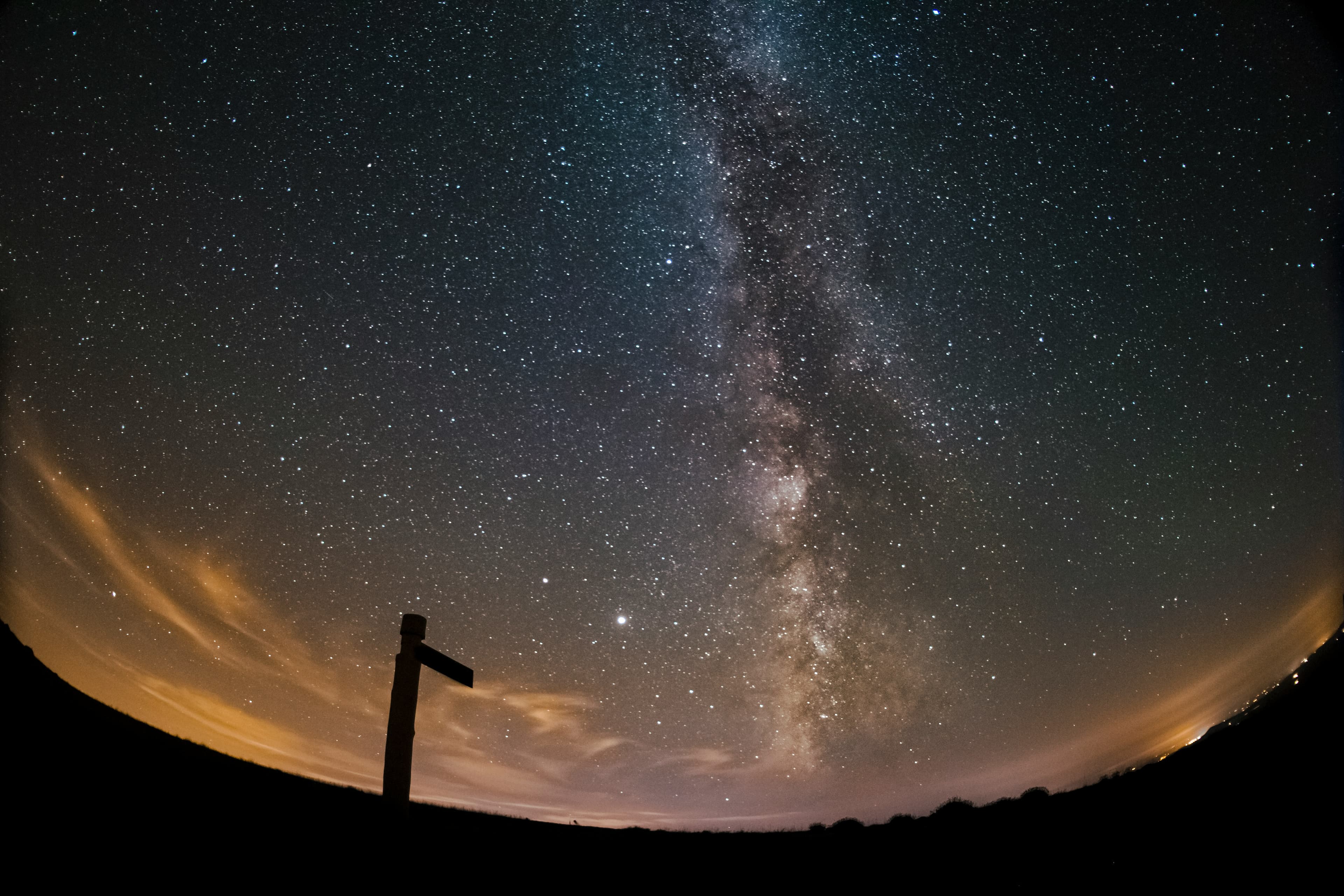
Night sky with the Milky Way over the Mediterranean: Malco Rent a Car routes to the 6 best dark skies for the Perseids. Photo by Tati and Adri on Unsplash.
See the Milky Way over the Mediterranean: the 6 best dark skies for the Perseids
Some skies do not deserve a small screen. Skies that demand you go out, drive, park somewhere that no tourist guide mentions, and look up for a long while. The Mediterranean coast has some of those skies. They are not on the motorway. There is no signposted car park, no open bar. They are at the end of a regional road, past the last village, where artificial light gives up and the universe takes its place.
August is the month. On the night of the 11th to the 12th, the Perseids turn any dark sky into a show that needs no explanation. But the Milky Way has been there all night, every night of the summer, waiting for someone to get far enough from the city to see it.
These are the six places worth looking up from.
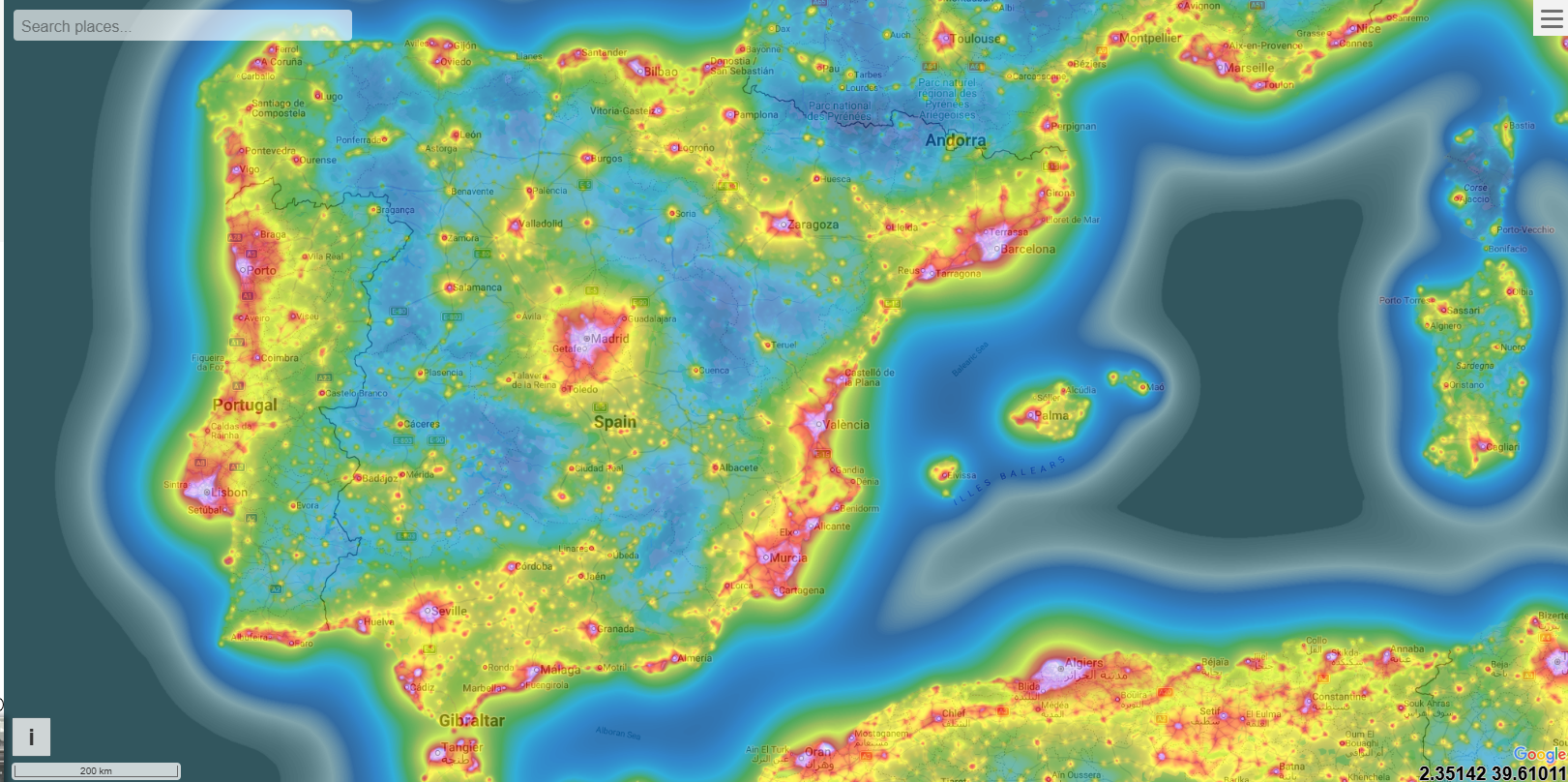
Dark zones with Bortle index 2 and 3, far from the light pollution of Barcelona, Valencia, Alicante, Castellón and Málaga.
1. Pico del Águila, Guadalajara — The balcony of Castile that few know
Just over two hours from Barcelona and less than ninety minutes from the lights of Madrid, there is a high Alcarria plateau where light pollution disappears almost abruptly. Pico del Águila, in the Alto Tajo natural park, offers something the coast can rarely give: a horizon in every direction, no mountains cutting the sky, no villages glowing in the background.
The access road from Zaorejas is one of those that in August smells of warm thyme and dry stone. You arrive, turn off the engine, and it takes exactly a minute to understand why you came.
The sky: Naked-eye limiting magnitude of 6.8 — one of the highest values on peninsular Spain. In August, the Milky Way crosses the zenith from north to south with a clarity that is disorienting. The galactic core, towards Sagittarius, looks like a dense cloud that is not a cloud.
The landscape: Tajo canyon at your feet, centuries-old holm oaks on the way up, almost complete silence broken only by nightjars, which in summer fill these sierras and whose erratic flight is easy to mistake for that of a large bat.
Best time: August new moon, between 11pm and 3am. Bring warm clothes — at 1,300 m, August nights easily drop below 15 °C.
2. Ports Natural Park, Tarragona — The dark end of the Costa Daurada
Less than two hours from Barcelona and just over one from Castellón, the Ports de Beseit hold one of the darkest skies of the Mediterranean arc. The limestone massif, declared a Biosphere Reserve, acts as a natural barrier against light pollution from the coast and the Ebro corridor.
The road up from Horta de Sant Joan or from Morella is already part of the experience: tight bends, ravines lined with black pines, and the growing sense that you are getting away from something rather than getting closer to anything in particular.
The sky: Zone certified by the Dark Sky network with Bortle 3 levels at the highest points. On moonless August nights, the Milky Way casts a shadow — literally; positioned correctly, you can see your own shadow created by galactic light.
The landscape: Red-sandstone ravines, 18th-century abandoned farmhouses, and the silhouette of griffon vultures that in summer glide even at night using thermals. It is one of the few places in Spain where you can feel that nature precedes you in every possible sense.
Best time: From Tossal dels Tres Reis or the mirador of Pobla de Benifassà, after midnight, when the Milky Way reaches its maximum height above the southern horizon.
3. Sierra de Gúdar, Teruel — The Aragonese Arctic in August
Teruel holds the distinction — little envied in winter and much envied in summer — of being the province with the least light pollution in peninsular Spain. The Sierra de Gúdar, on its eastern edge, is accessible from Valencia in under two hours and from Castellón in just over one.
The village of Gúdar, with its 80 inhabitants and its ruined Moorish castle, is the starting point. The forest track up to the Valdelinares pass — the southernmost ski resort in Spain — cuts through a forest of pines and junipers that in August smells of warm resin and at night turns into a black tunnel from which you emerge directly under the clearest sky in the Mediterranean.
The sky: Altitude of 1,900 m, Bortle 2 at points furthest from the village. In August, with the Perseids at their peak, between 80 and 100 meteors per hour can be counted from here. It is not a typo.
The landscape: The peculiarity of Gúdar is that it combines the sky with a landscape that by day looks Scandinavian — alpine meadows, free-range cattle, peaks above 2,000 m — and at night takes on a dimension hard to describe without sounding exaggerated.
Best time: The night of 12 August, positioned at the Valdelinares pass looking northeast. Bring a sleeping bag even if you only plan to stay a few hours.
4. Cabo de Gata, Almería — Desert, volcanoes and stars over the sea
Europe's only desert has, logically, the clearest skies in Europe. Cabo de Gata, in the south-eastern tip of the peninsula, accumulates more than 320 days of sun a year — which in astronomical terms means more than 320 potentially perfect nights to observe.
From Málaga it is less than two hours on the A-7. The road skirting the natural park on its southern face, between Carboneras and San José, is one of the most spectacular on the Spanish Mediterranean: black volcanic lava falling into the sea, nameless coves, and the total absence of artificial lighting for kilometres.
The sky: The combination of southern latitude, altitude of volcanic terrain and absence of large urban centres within a 50 km radius makes the Cape one of the best observation points in southern Europe. Canopus, the second-brightest star in the sky and invisible from most of the peninsula, is visible from here on summer nights.
The landscape: Dry ramblas with oleanders, prickly pears, the silhouette of extinct volcanoes against the sky, and the black sea shining with the reflection of the Milky Way on moonless nights. It is one of those places that are already extraordinary by day and that at night directly disconcert.
Best time: Playa de los Genoveses or Playa de Mónsul after midnight, with the Cabo de Gata lighthouse as a reference and a clear southern view for Scorpius and the galactic core.
5. Carrascal de la Font Roja Natural Park, Alicante — The forest hiding the best sky in the province
35 minutes from Alicante and less than an hour from Valencia, Font Roja is the climatic anomaly of the province: a relic forest of Atlantic climate set in the middle of Mediterranean mountains, where yews and maples coexist with centuries-old holm oaks at over 1,200 m altitude.
The Carrascal protects one of the darkest skies accessible from the Levante coast. The key is the position: south of Alcoi, between the Menejador and Mariola ranges, the northern horizon is clear of Valencia's light pollution, and the south opens directly onto the darkness of the inland mountains.
The sky: Bortle 4 at the recreational area car park, Bortle 3 if you climb to Menejador on foot in 40 minutes. In August, with the Perseids active, the forest becomes a strange and perfect place: meteors crossing the sky between treetops, owls answering the darkness with their usual regularity.
The landscape: The Carrascal has something high-mountain observatories do not — the human scale of the forest, the leaf litter underfoot, the temperature dropping ten degrees compared to the coast. In August, leaving the coastal heat and arriving here with a clear sky is hard to forget.
Best time: Font Roja recreational area, after midnight. The road up from Alcoi is well-paved and perfectly drivable at night.
6. Penyagolosa, Castellón — The highest peak in the Spanish Mediterranean
Penyagolosa, at 1,814 m, is the roof of the Comunitat Valenciana and one of the visual landmarks of the whole coast between Valencia and Castellón. From the city of Castellón it is less than 90 minutes. From Valencia, just over two hours.
Access from Vistabella del Maestrat along the CV-170 is a mountain road worth driving in daylight to take it in — and completely different at night: headlights carving the bends, the smell of black pine, the temperature dropping degree by degree until you park at the Pla de la Garganta and the thermometer reads 12 °C in mid-August.
The sky: The combination of altitude, the absence of large towns within a 40 km radius and the north-facing orientation of the Pla de la Garganta makes this an exceptional spot to observe the full arc of the Milky Way. On Perseid nights, the meteor shower seems to spring from the peak itself — the Perseus radiant appears right above the mountain silhouette.
The landscape: Black pines over 200 years old, the absolute silence broken only by badgers and wild boar grazing in clearings, and the feeling of being in a place geography has decided to keep apart from the 21st century. The 14th-century hermitage of Sant Joan de Penyagolosa appears in the darkness as an unsurprising presence — as if it had always been meant to stand alone under this sky.
Best time: Pla de la Garganta, between 11pm and 3am, looking south. The galactic core sits right above the Sierra de Gúdar horizon, creating a perspective rarely seen in night-landscape photography.
What you need to know before you head out
The moon rules. Check the lunar calendar before planning. A full moon ruins 80% of the observation. New moon nights in August fall on the 1st and the 30th. On the 12th, with a first-quarter moon, it sets before midnight — dark enough for the Perseids.
Dark adaptation takes 20 to 30 minutes. Switch off your phone or drop the brightness to minimum with a red filter. A single glance at a bright screen takes you back to square one.
What to bring: Warm clothes even if you are coming from the beach. A blanket. Water. A red torch or an app with a red-light filter. And the Stellarium app, which will use GPS to identify exactly what you are looking at.
The car is the key. None of these places has night-time public transport. All have roads in good condition. The freedom to arrive when you want, stay until 3am if the sky deserves it, and leave without checking any bus timetable is exactly what makes these nights work. The sky provides the show. The car provides the freedom.
Which one would you head out to tonight?

Patricia Alcántara
Fleet Director at Malco
Specialist in fleet management and optimization of corporate mobility solutions.